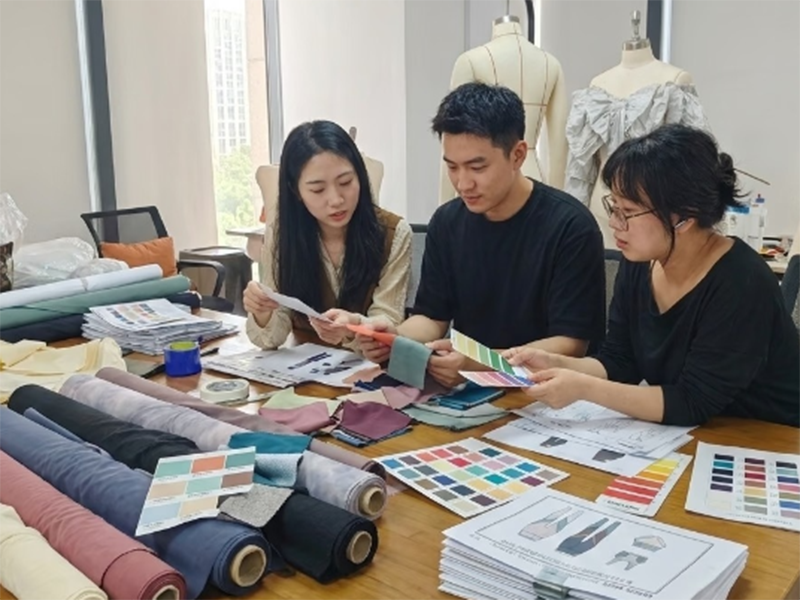
How We Ensure Light-Colored Yoga Leggings Stay Squat-Proof Before Bulk Production
For activewear brand founders and sourcing managers, producing squat-proof yoga leggings in light pastel shades is always a technical challenge.
Pastel pink, butter yellow, and cream leggings sell exceptionally well for activewear brands. But they come with one major pain point: they tend to turn sheer when stretched. Dealing with customer complaints about see-through leggings is a nightmare. But making fabric squat-proof isn’t as simple as just making it thicker. Heavy fabric ruins the soft, breathable feel that yogis actually want.
Here is how we handle light-colored seamless leggings in our factory to guarantee 100% opacity before moving into mass production.
1. Fabric Weight (GSM) Isn’t the Only Factor
A common mistake when fixing sheer fabric is simply bumping up the GSM (Grams per Square Meter). If you go too heavy, the leggings become stiff, hot, and uncomfortable.
When manufacturing premium squat-proof yoga leggings, we focus on yarn density and fiber combination rather than just adding raw weight:
Target GSM: For lighter shades, we usually land between 280 GSM and 320 GSM.
Microfiber Selection: We use dense, high-filament nylon yarns. Fine filaments pack tightly together, blocking light without adding unnecessary bulk.
Spandex Balance: We keep elastane around 20%–25%. This provides enough compression without pulling the knit structure so wide open that it becomes sheer.
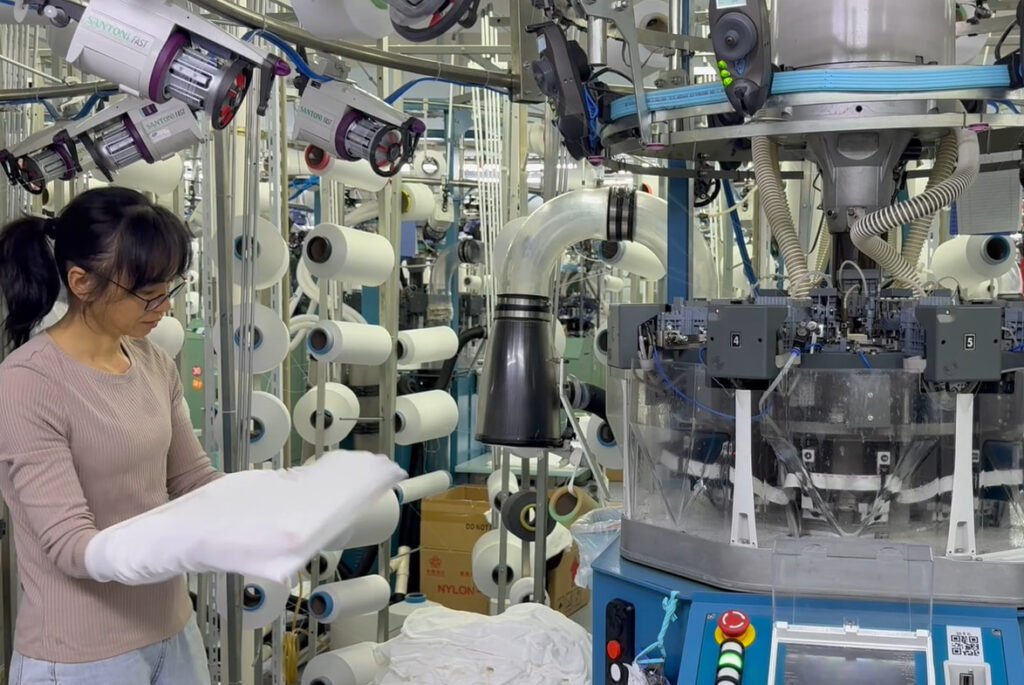
2. Fine-Tuning Knitting Tension on Santoni Machines
On seamless machinery, the same yarn can yield two completely different garments depending on how the machine is calibrated. If thread tension is too loose, the legging looks fine on the hanger—until someone actually puts it on and bends over.
During the sample development phase for squat-proof yoga leggings, our technicians adjust the settings specifically for light colors:
Stitch Loop Size: We tighten the needle loops on our Santoni machines to close up micro-gaps in the knit.
Dual-Feed Knitting: For problematic pastel shades, we run a multi-feed loop structure that adds a slightly denser layer on the inside while keeping the outer face smooth.
3. Our 3-Step Physical Inspection Before Bulk Approval
Before we clear any light-colored fabric for the production line, the sample batch goes through three physical quality control tests:
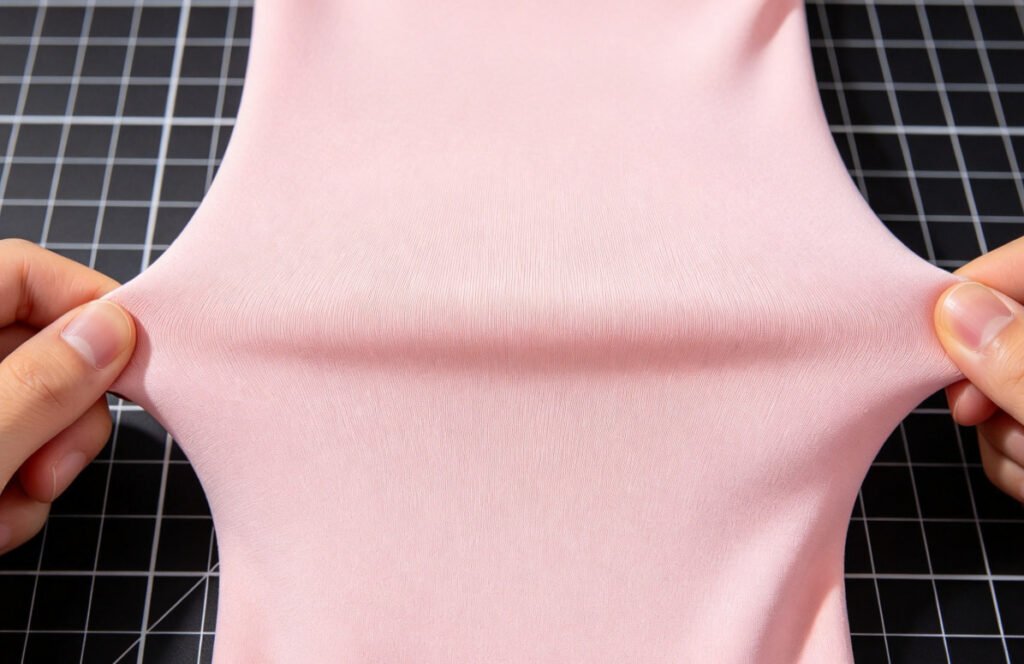
Step 1: The Grid Stretch Test
We stretch the fabric sample by 150% both horizontally and vertically over a high-contrast black-and-white grid board. If the dark pattern bleeds through, the fabric formula gets sent back for adjustment.
Step 2: High-Lumen Light Test
Natural room lighting can be deceptive. We inspect stretched samples under high-lumen workshop lamps to simulate bright gym lights and direct sunlight.
Step 3: Real Wear & Movement Test
Our fit models perform deep squats, lunges, and forward folds. We pay extra attention to high-stress zones—mainly around the glutes and hips—to ensure zero sheer spots or seam strain.
Why This Matters for Your Next Order
Fixing a transparency issue after the bulk shipment arrives is both expensive and damaging to your brand reputation. By dialing in the yarn density, machine tension, and stretch limits during sampling, we make sure that:
Bulk production fits and performs identically to your approved pre-production sample.
Light-colored styles stay completely opaque under real workout conditions.
Your return rates stay low and customer loyalty stays high.
Planning Your Next Activewear Collection?
If you are developing pastel shades or expanding your seamless line, we can help you build custom fabrics that balance comfort, stretch, and 100% opacity.
Drop us a message with your tech pack or ideas, and we’ll prepare custom fabric swatches for your team!