Introduction
As the European Union moves aggressively toward a circular economy, complying with EU PPWR activewear packaging regulations has become a critical priority for sportswear brands and importers selling into European markets. Among the most impactful upcoming frameworks, this regulation fundamentally shifts how performance apparel is packed and shipped.
For private-label activewear brands and OEM/ODM buyers, understanding the directives behind sustainable packaging is no longer just a marketing advantage—it is becoming a standard supply chain requirement across every packaging touchpoint, including polybags, garment hangtags, shipping cartons, and sealing tapes.
What is the EU PPWR?
The EU PPWR aims to reduce packaging waste, increase the use of recycled materials, and ensure all packaging placed on the EU market is fully recyclable by 2030. Key focus areas relevant to the apparel and activewear industry include:
Recyclability & Material Safety Standards: Primary plastic bags, retail hangtags, corrugated cartons, and sealing tapes must meet strict recyclability standards and heavy metal concentration limits (e.g., lead, cadmium, and hexavalent chromium in inks and adhesives).
Post-Consumer Recycled (PCR) & Certified Content: Minimum recycled content mandates will apply to plastic components, alongside strict sustainability requirements for paper-based packaging materials.
Packaging Volume & Void Space Optimization: Eliminating excess empty space inside individual garment packs and outer shipping cartons, setting a strict maximum empty space ratio (targeting a maximum of 50% void space in transport packaging).
How PPWR Impacts Activewear Supply Chains
In traditional activewear exporting, garments are fitted with hangtags, packed in polybags, and sealed into master cartons with standard BOPP (Biaxially Oriented Polypropylene) tape. Under PPWR guidelines, every layer of this packaging hierarchy faces direct compliance scrutiny:
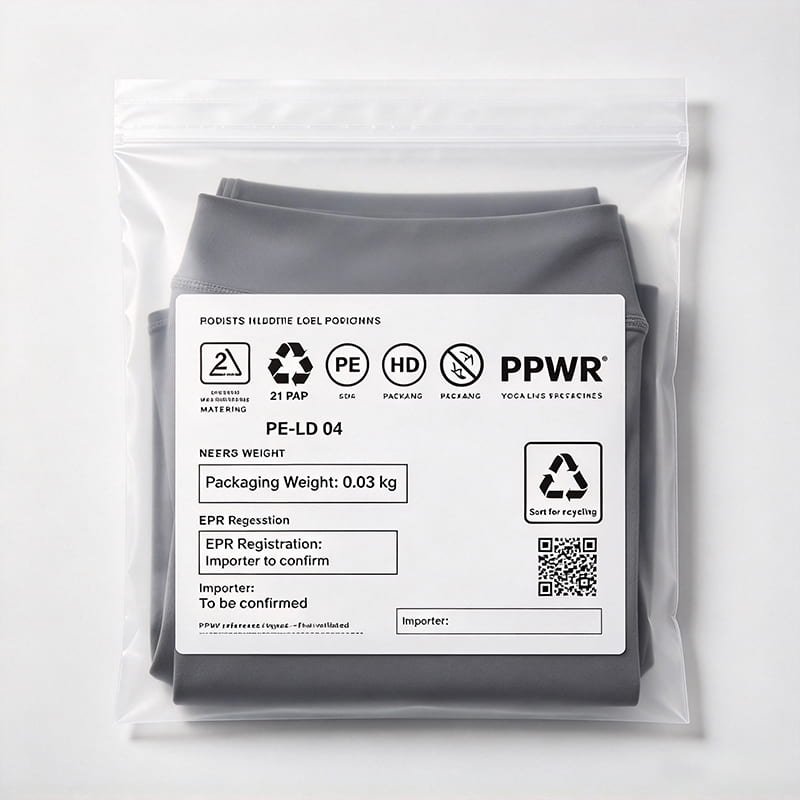
Primary Polybags: Polybags protecting sports bras and leggings fall under plastic packaging regulations, requiring clear material labeling, certified recycled content, or high mono-material recyclability.
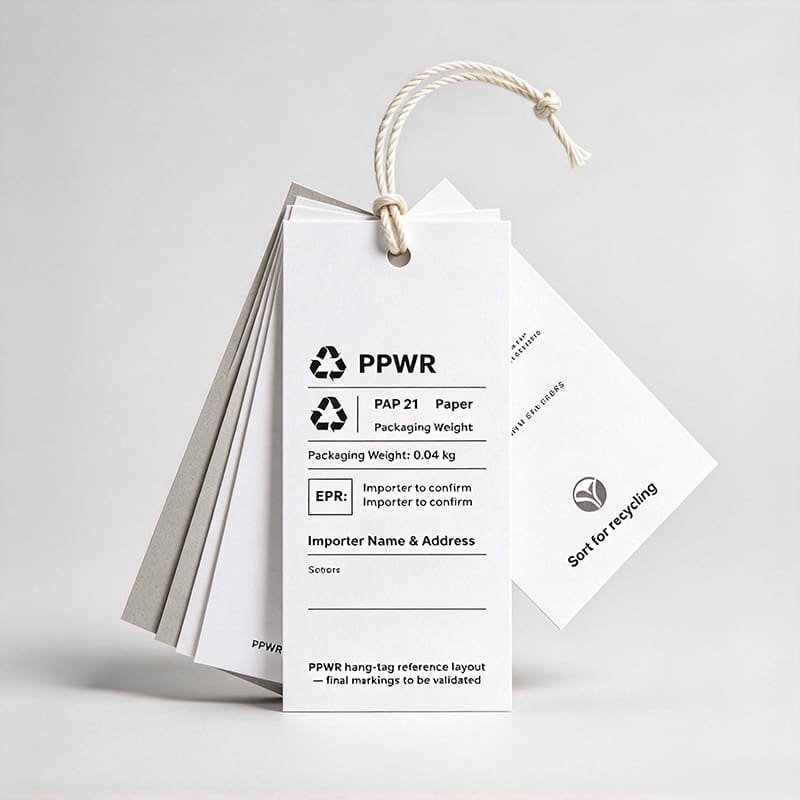
Garment Hangtags Classed as Packaging: Regulatory standards clarify that hangtags attached to garments during shipping fall under the scope of packaging. Brands must ensure hangtags use recyclable FSC-certified paperboard, eco-friendly string/attachers, and non-toxic printing inks.
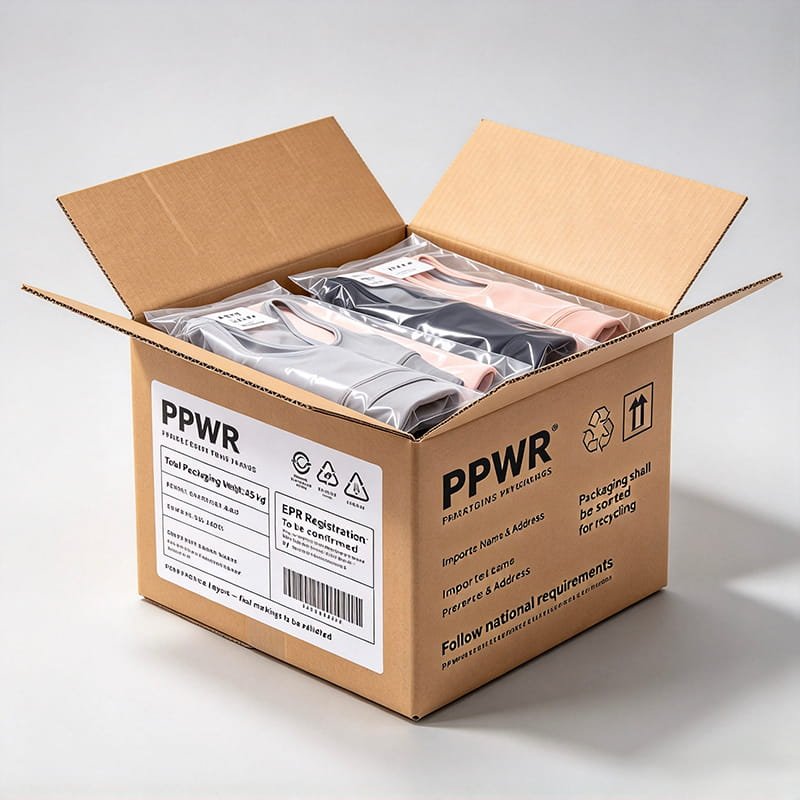
Export Master Cartons: Outer corrugated boxes must strictly comply with material safety rules—limiting toxic substances in printing inks and box glues—while using highly recyclable paperboard.
Box Sealing Tapes (BOPP & Paper Tapes): Plastic BOPP sealing tapes applied to master cartons are explicitly classified as packaging materials under PPWR. Because conventional plastic tape can contaminate paper recycling streams, transitioning to recyclable mono-material options or paper-based gummed tapes is becoming critical.
Freight Space Restrictions: Master carton dimensions must closely fit garment density to prevent shipping “mostly air,” satisfying PPWR volume minimization rules.
Traceability Expectations: Importers will need complete documentation verifying material composition and compliance certifications across all packaging components.
Practical Steps for Private-Label Activewear Brands
While compliance responsibility ultimately rests with the brand importing products into EU member states, activewear buyers can take proactive steps when collaborating with manufacturing partners:
Review Polybag Options: Consider transitioning to GRS-certified (Global Recycled Standard) 100% recycled PE polybags or compostable alternatives.
Switch to Compliant Master Cartons: Specify eco-friendly outer packaging requirements in your tech packs. Work with suppliers that use FSC-certified corrugated boxes printed with water-based inks and assembled with non-toxic glues to ensure 100% compatibility with EU paper recycling streams.
Optimize Fold, Pack & Carton Dimensions: Design master carton dimensions tailored to your exact garment fold size. Eliminating excess air space inside export boxes directly satisfies PPWR’s volume minimization rules while optimizing sea and air freight efficiency.
Audit Packaging Specifications Early: Address packaging and master carton specifications during the tech-pack development phase rather than right before shipping.
Supply Chain Preparedness
Navigating international environmental regulations requires close cooperation across the entire supply chain. By proactively reviewing packaging materials and box packaging parameters alongside garment specifications, activewear brands can build resilient, forward-thinking operations tailored for the European market.
Disclaimer: This article is provided for informational and educational purposes only and does not constitute formal legal, regulatory, or compliance advice. Brands and importers are advised to consult with official certification bodies and legal advisors for specific regional compliance requirements.