Introduction
Sustainability is no longer a marketing gimmick for the yoga apparel industry — it has become a core industry standard and irreversible future trend. In 2026 and beyond, EU and US consumers, retailers, and brand buyers are prioritizing eco-friendly yoga wear over conventional styles. Strict global environmental regulations, rising consumer eco-awareness, and mature circular textile economies are pushing the entire activewear supply chain to upgrade.
For B2B wholesale buyers and private label yoga apparel brands, switching to sustainable activewear is not just about environmental responsibility. It is a key strategy to avoid market elimination, meet regional compliance rules, and gain premium market pricing. This blog breaks down why sustainable yoga wear dominates the industry, what eco-materials are trending, core compliance requirements, and how your brand can seize future market opportunities through sustainable customization.
1. Why Sustainable Yoga Activewear Is Taking Over the Market
The rapid growth of sustainable yoga wear stems from dual drivers of consumer demand and policy regulation, completely reshaping the B2B sourcing landscape.
-4.jpg "Sustainable Activewear: The Future of Yoga Clothing Industry 1")
1.1 Growing End-Consumer Eco-Consciousness
Modern yoga enthusiasts pursue a holistic healthy and low-carbon lifestyle. They no longer focus only on the stretch, comfort, and squat-proof performance of yoga clothes, but also pay attention to whether the products are environmentally friendly, non-toxic, and sustainably produced. Eco-friendly yoga wear with clear material traceability can effectively enhance brand reputation and user loyalty, bringing higher repurchase rates for brands.
1.2 Strict Global Import & ESG Compliance
European and American markets have rolled out rigorous textile environmental regulations such as EU CSDDD and REACH standards. Traditional ordinary fabrics without environmental certifications face huge risks of customs detention, sales bans, and green tariffs. For B2B buyers, sustainable certified activewear is no longer an optional highlight, but a basic threshold for market entry.
1.3 Stronger Brand Competitiveness & Premium Profit
Sustainable activewear supports brand green positioning and differentiated marketing. Compared with homogeneous ordinary yoga clothes, certified eco-friendly products can achieve 15%-30% premium pricing, helping brands get rid of low-price competition and attract high-end consumer groups.
2. Top Sustainable Fabric Materials for Modern Yoga Wear
Sustainability does not mean sacrificing performance. The latest eco-friendly yoga fabrics perfectly balance low carbon emission and professional sports functionality, fully meeting the needs of high-frequency yoga and fitness scenarios.
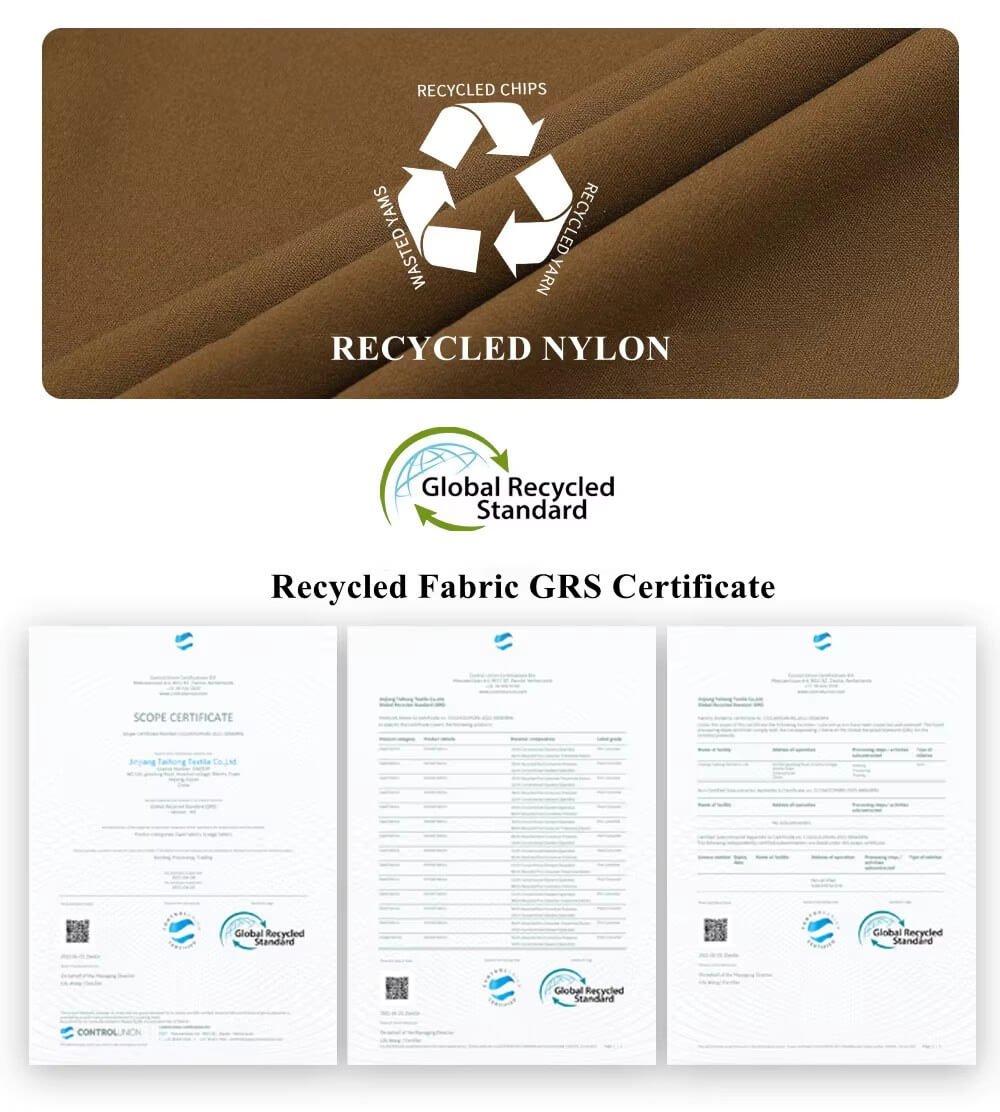
2.1 GRS-Certified Recycled Nylon & Polyester
The most mainstream sustainable material in the current yoga industry. Made from recycled plastic bottles and textile waste, it features high elasticity, matte texture, and excellent shape retention, completely matching the performance of virgin fabrics. It supports complete GRS certification and material traceability, being the first choice for most European and American sustainable yoga collections.
2.2 Organic Cotton & Lyocell Blends
Ideal for soft, skin-friendly yoga loungewear. Free from harmful chemical pesticides and dyes, these fabrics are breathable, hypoallergenic, and ultra-soft, suitable for restorative yoga and daily casual wear. They fit perfectly with the minimalist and healthy brand tone of yoga lifestyle.
2.3 Low-Impact & Waterless Dyeing Fabrics
Adopting advanced waterless dyeing and zero-waste cutting technology, this innovative material greatly reduces water pollution and energy consumption during production. It has stable color fastness and no color fading, meeting both environmental protection requirements and high-quality wearing standards.
3. Core Industry Trends of Sustainable Yoga Wear (2026-2027)
3.1 Full Supply Chain Transparency
Buyers and end consumers are no longer satisfied with simple environmental slogans. Traceable material sources, complete certification documents, and verifiable low-carbon production processes have become standard sourcing requirements. Green production transparency is the core credential for B2B suppliers to gain trust.
3.2 Circular & Zero-Waste Design
The industry is shifting to circular design concepts. More brands adopt mono-material structures and zero-waste cutting processes to facilitate later recycling and reuse. Durable and wear-resistant sustainable yoga wear is replacing fast-fashion low-quality products, conforming to the long-term low-carbon development trend.
3.3 Integration of Eco-Friendly & High-Performance
Future sustainable yoga wear will no longer be limited to basic comfort. It will integrate sweat-wicking, quick-drying, high stretch, squat-proof and other professional sports functions on the basis of environmental protection, realizing the perfect combination of green concept and sports practicality.
4. Must-Have Certifications for Sustainable Yoga Activewear
To smoothly enter EU and US markets and avoid “greenwashing” disputes, sustainable yoga wear must equip with authoritative third-party certifications:
- GRS (Global Recycled Standard): Verifies recycled material content and standardized recycled production procedures, the core certification for recycled fabric yoga wear.
- OEKO-TEX Standard 100: Proves fabrics are free of harmful chemicals, skin-safe and hypoallergenic, mandatory for cross-border textile sales.
- BSCI/SA8000: Certifies social and labor compliance, meeting European and American brand ESG audit standards.
5. Why B2B Brands Need to Layout Sustainable Yoga Wear Now
The sustainable yoga apparel track is still in the incremental growth stage, with huge market blank space. Early layout brands can quickly establish market barriers:
First, avoid policy risks. Global environmental supervision is becoming increasingly strict, and non-compliant products will be completely phased out of the market. Second, capture high-end customer groups. Eco-friendly products help brands shape unique green positioning and avoid homogeneous low-price competition. Third, build long-term brand value. Sustainable development is a long-term industry track, which can continuously accumulate brand reputation and loyal users.
Conclusion
Sustainable activewear is not a temporary trend, but the inevitable future of the global yoga clothing industry. With the continuous upgrading of environmental policies, consumer awareness and supply chain technology, eco-friendly, high-performance, and traceable yoga wear will completely dominate the mainstream market.
For B2B buyers and brand owners, seizing the sustainable track now is equivalent to occupying the core position of the future yoga apparel market. We provide one-stop sustainable yoga wear OEM & ODM customization services, with full GRS, OEKO-TEX certified fabrics, flexible MOQ, and compliant low-carbon production processes. Support customized green collections for your brand.