Introduction
Working with a professional yoga wear factory helps brands reduce costs, improve product quality, and launch new collections faster. However, most new B2B buyers and private label brands encounter delays, defective goods, color mismatches, or over-budget issues simply because of avoidable cooperation mistakes.
Yoga apparel has strict requirements on elasticity, squat-proof performance, stitching, and fabric feel — far more demanding than ordinary casual clothing. Small communication errors or unclear terms with your manufacturer can turn into large-scale order losses.
Based on years of OEM & ODM customization experience, we summarize the most common and costly mistakes buyers make when cooperating with yoga wear factories. This guide helps you avoid hidden risks, stabilize product quality, and build long-term smooth manufacturing partnerships.
1. Choosing a Factory Based Only on Low Price
Price is always the primary consideration for B2B buyers, but choosing a yoga wear manufacturer purely based on the lowest quote is the biggest risky mistake.
Many factories offer ultra-low prices to win orders, but cut corners in fabric density, elasticity standards, stitching density, and QC processes. For yoga clothes, inferior fabrics will lose stretch after washing, become sheer during squatting, or deform easily — resulting in high return rates and serious damage to your brand reputation.
Low pricing usually means hidden costs: extra charges for logo printing, label fees, revision fees, or rushed shipping surcharges. Smart buyers compare comprehensive value, not unit price alone.
2. No Complete Tech Pack & Clear Specifications
Most production disputes happen due to unclear technical requirements. Many buyers only provide simple pictures or verbal descriptions without a complete tech pack.
Yoga wear requires precise standards: fabric weight, stretch rate, squat-proof grade, seam position, waistband width, logo placement, and size tolerance. Without written specifications, factories will follow their own default standards, which often differ from your brand’s expectations.
This leads to repeated sample revisions, delayed mass production, and inconsistent bulk quality. A complete, detailed tech pack is the foundation of error-free cooperation.
-3.jpg "Common Mistakes When Cooperating With Yoga Wear Factories 1")
3. Skipping Pre-Production Sample Confirmation
To save time, some buyers directly arrange mass production after confirming the design draft. This is one of the most dangerous mistakes in yoga apparel customization.
Pre-production samples verify fabric feel, real color, stitching craftsmanship, fitting effect, and printing accuracy. Yoga wear problems such as tight crotch, insufficient elasticity, see-through issues, and uneven waistband can only be found on physical samples.
Modifying samples costs little time and money, but reworking bulk orders causes huge losses. Always confirm and approve pre-production samples before manufacturing.
4. Unclear MOQ & Customization Terms
Many new buyers misunderstand factory MOQ rules. They assume MOQ is total order quantity, while the factory actually calculates by style or color.
In addition, unclear customization terms often cause extra fees: private label charges, custom packaging fees, color revision costs, and screen printing plate fees. If these terms are not confirmed in advance, buyers will face unexpected over-budget expenses.
Professional cooperation requires confirming MOQ calculation rules, included services, and extra charge items in the initial quotation stage.
5. Ignoring Fabric Consistency & Batch Difference
Yoga apparel highly depends on fabric performance. Many buyers only check the first sample’s fabric but ignore batch color difference and fabric stability.
Different fabric batches have slight color deviations, different stretch tension, and different hand feel. Factories with unstable supply chains may mix old and new fabric batches, resulting in inconsistent color tone and elasticity in one bulk order.
Always confirm that the whole order uses the same batch of fabric and require the factory to provide bulk fabric inspection reports.
6. Vague Lead Time & Delivery Terms
Many delayed shipments are not caused by factory laziness, but by unclear time agreements between both sides.
Buyers often confuse sample time, production time, and delivery time. Some factories only count pure production days and exclude material preparation time, revision time, and holiday delays.
Without written delivery deadlines and delay liability clauses, buyers cannot claim compensation once orders are delayed, resulting in missed sales seasons and inventory gaps.
7. Lack of Formal Contract & QC Standards
Simple chat-based agreements cannot protect B2B cooperation interests. Some buyers rely on verbal promises and ignore formal contracts, quality standards, and after-sales clauses.
When defective products appear, both sides dispute over who is responsible for rework, replacement, or freight costs. Without clear QC pass rates, defect judgment standards, and after-sales policies, buyers bear all risks alone.
Reliable cooperation must be based on written contracts, clear inspection standards, and guaranteed after-sales service.
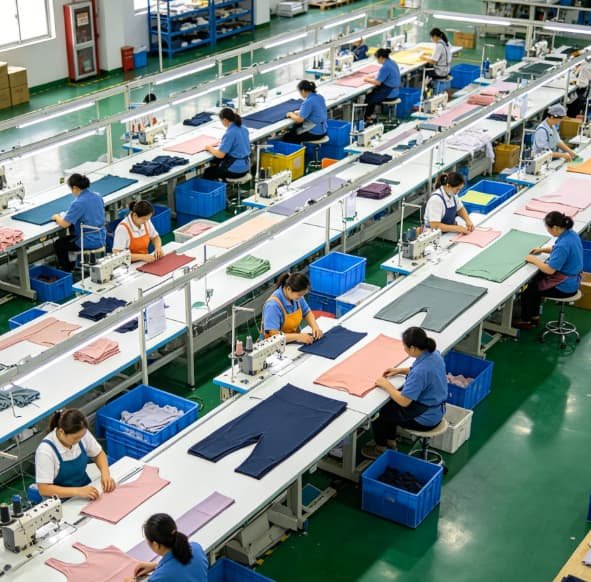
8. Poor Communication & Frequent Requirement Changes
Unstable demand and frequent last-minute changes are major causes of disordered production and increased costs.
If buyers repeatedly modify colors, logos, sizes, or packaging after production starts, the factory needs to readjust machines, re-cut fabrics, and rearrange schedules. This seriously delays delivery and generates extra modification fees.
Professional brands confirm all details in the early stage and minimize temporary changes during mass production.
Key Takeaways for Smooth Factory Cooperation
Successful yoga wear customization cooperation relies on standardized processes rather than luck. To avoid common pitfalls:
- Evaluate factories by overall quality, service, and stability, not only price
- Provide complete tech packs and detailed specifications
- Strictly confirm pre-production samples before bulk orders
- Clarify MOQ, customization fees, and lead time in writing
- Insist on unified fabric batches and consistent quality standards
- Sign formal contracts with clear QC and after-sales terms
Conclusion
Most cooperation problems with yoga wear factories are predictable and avoidable. By staying away from these common mistakes, B2B brands can effectively reduce order risks, control costs, stabilize product quality, and build long-term reliable supply chains.
If you want stable, transparent, and risk-free yoga wear OEM & ODM cooperation, our team provides standardized production processes, clear term agreements, strict quality control, and flexible MOQ support. Contact us to start your worry-free customization project.
-1.jpg "Common Mistakes When Cooperating With Yoga Wear Factories 3")
